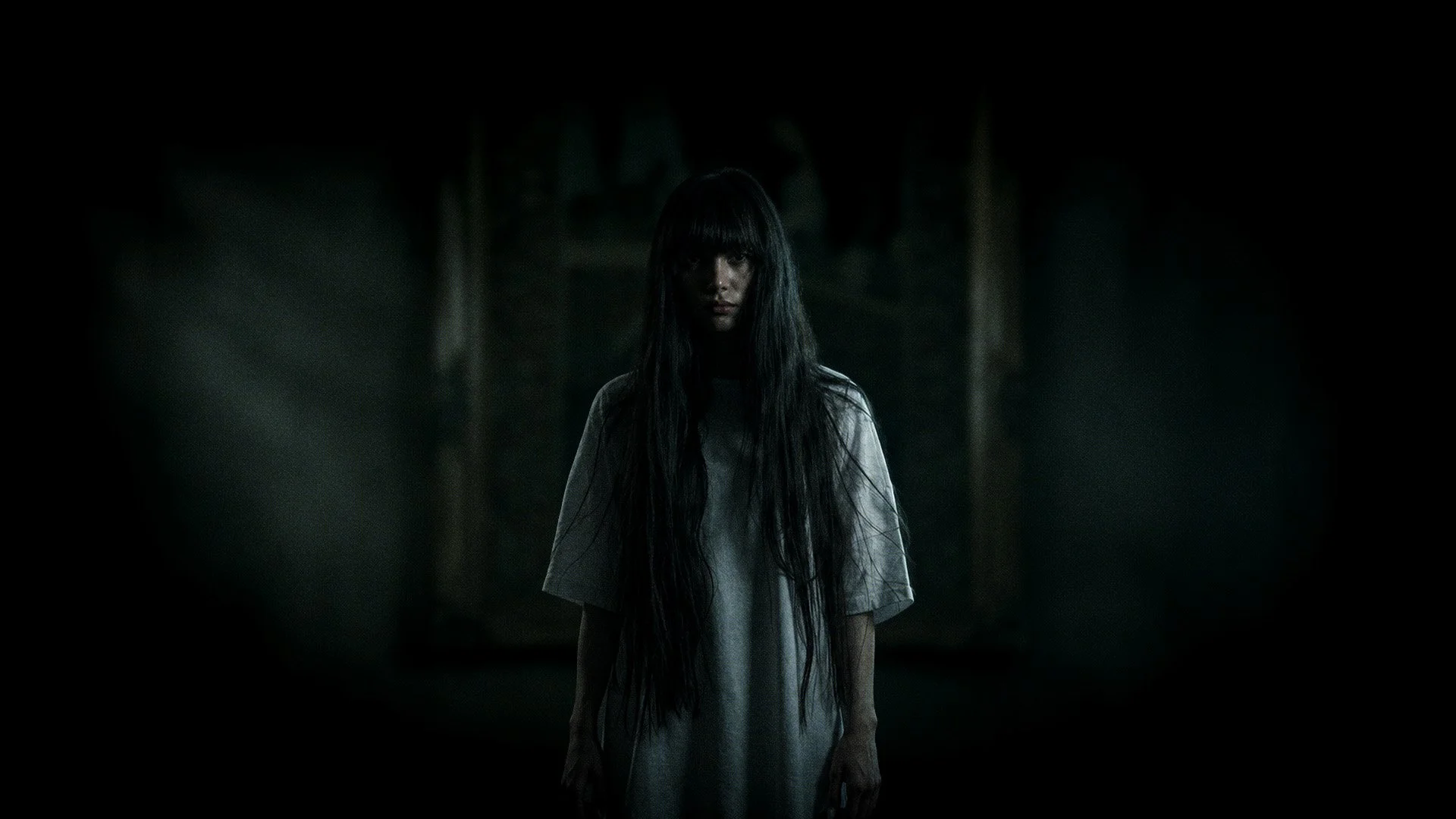
Disembodied spirits hate being “homeless.” A demon’s endless quest is to take up residence somewhere.
The real goal is to possess a human creature, but it is not below a demon to possess animals and objects. Annabelle, a doll featured in The Conjuring, was a haunted inanimate object. The Conjuring also involved a haunted property, as do lots of other horror films. Most people attribute hauntings to ghosts, but the culprits are actually demons.
The Exorcist
Perhaps the best-known pop-culture tale of demon possession is the 1973 film The Exorcist. Before it, no horror film had been nominated for an Oscar or generated so much revenue. It originated with William Peter Blatty’s same-name novel, which was based on an allegedly authentic exorcism of a thirteen-year old boy almost three decades before. In print and on the screen, The Exorcist deeply affected audiences; in some cases, paramedics were called to treat moviegoers who fainted or became hysterical while viewing the film.
The movie opened with the amplified strains of Islamic prayers at an archaeological dig in Iraq. There, an experienced exorcist named Father Merrin found a statue of a winged demon. His discovery presaged his next and most costly exorcism: the case of Regan McNeil, a twelve-year-old girl possessed by a demon after using a Ouija board. Father Merrin would collaborate with another priest, the conflicted Father Karras, whose parish was in the girl’s neighborhood.
By the time of the exorcism, the girl’s possession was full-blown. She screamed obscenities, levitated, and vomited violently. Her bed shook; her head swiveled a full 360 degrees; and her tongue grew unnaturally long. The possessing demon spoke through her using vile words and tones, taunting and verbally abusing the priests. When Karras took a break from the action, he returned to find Father Merrin dead. Infuriated, Father Karras grabbed Regan and shouted: “Come into me! Take me!”
The demon obliged. Regan was freed and the priest’s demonic transformation began. Before his possession was complete, he threw himself out of a window and died. The ending did not make perfect theological sense, but it was good for business and the making of sequels.
The Exorcist combined authenticity and accuracy with creative license in the following ways:
The girl’s disfigured appearance and contorted postures, changes in her voice, use of ancient languages and obscenities, levitation, and grotesque sexual behavior were consistent with the reality of demonic possession.
The Roman Catholic rites were also reasonably authentic. But Father Karras’ decision to offer himself as a demon host was a stretch. The idea may have come from Jesus’ granting permission for Legion to enter a herd of swine, but His level of authority is higher than ours. Also, Father Karras’ act could not destroy the demon or prevent its future activity.
The idea of begging demons to leave, as the priests did, is unbiblical. Jesus never begged demons. They begged Him!
The Demon Pazuzu
The statue in the opening scene of The Exorcist represented the demon that possessed Regan McNeil. Pazuzu is believed to be an ancient Assyrian and Babylonian mythological demon. The archaeological dig depicted in the movie occurred at the site of ancient Nineveh, the Assyrian capital. Pazuzu has its share of fans, being also a member of the Marvel Comics universe. It changes shape, creates storms, and “spread[s] diseases via mystic winds.”
The Exorcism of Emily Rose
As exorcism movies go, I am partial to The Exorcism of Emily Rose. It presents less gore than The Exorcist but more insight into the issues faced by demon-possessed people. The movie is based on the true story of a young European woman, Anneliese Michel, who died of starvation after months of exorcism rituals. An investigation was opened, and her exorcists and family were charged in her death, found guilty of manslaughter, and given short jail sentences.
Like Anneliese, Emily Rose was diagnosed with epilepsy. This is not unusual. The spiritual maladies of demon-oppressed and demon-possessed people are often mischaracterized as mental illnesses. A demon-possessed boy in Scripture had epileptic-type symptoms. The boy’s father told Jesus, “Whenever [the demon] seizes him, it slams him to the ground, and he foams at the mouth, and grinds his teeth and stiffens out” (Mark 9:18 NASB1995). In Matthew’s account, the father said, “Lord, have mercy on my son, for he is an epileptic and suffers severely; for he often falls into the fire and often into the water” (Matthew 17:15). Instead of “epileptic,” some versions say the boy was a “lunatic” (NASB1995). The Greek word literally means “moonstruck.”
The devil is crafty. He knows that demon-possessed people can never be delivered by medicine alone. He sadistically removes them from the help they need, thus ensuring their demise. Few people realize what he is doing, so he succeeds again and again. Because of widespread ignorance, his plan proves almost flawless. If demon-possessed patients and their families plead for spiritual care, their cries are seen as a sign that they are crazy!
It is ironic that Hollywood makes billions on the supernatural and paranormal each year, while pushing the idea that cases like Anneliese’s should remain in the realm of the senses and science. This marginalizes the reality of the spirit realm, the existence of God, and the reality of Satan. In fact, one of Satan’s greatest accomplishments is convincing people that he does not exist.
Moon “Madness”
Is the association between epilepsy and being moonstruck purely figurative? For millennia, legend, myth, and folklore have linked full moons with bizarre behaviors and occurrences, including temporary insomnia and insanity. The classic and most spectacular lunar effect is lycanthropy: “the assumption of the form and characteristics of a wolf held to be possible by witchcraft or magic” (becoming a werewolf).
I believe there is a more fundamental link: the activity of wicked heavenly creatures, including lunar deities.
Even the vocabulary seems to suggest this. According to History.com, the words lunacy and lunatic come from the Roman goddess of the moon, Luna, who was said to ride her silver chariot across the dark sky each night.
So, is being moonstruck a term of fantasy, or a reality of the unseen battle between good and evil?
Recent Horror Films and Directors
There are other films on demonic activity that really stand out from the rest because of their accuracy, creativity, and legitimate fright factor. Bring Her Back is about two step-siblings who, after becoming orphans, are put in a ritualistic occult situation by their foster mother. Talk To Me is about some teenagers who discover a mysterious severed hand, enabling them to talk to spirits. These two films were directed by Danny and Michael Philippou. Weapons is a film that has seen recent meteoric success due to its fresh take on witchcraft and how people can be ritualistically possessed. Directed by Zach Cregger, it was the follow-up movie to his previous one, Barbarian, which, if you’re not rooted in the Word will have you rethinking vacationing in Airbnbs (Air Bed and Breakfasts). Jordan Peele, director of Get Out, famously known for its creation of the “sunken place,” and Nope, an inventive and creepy UFO/UAP story, brought about a film that addressed a person’s shadow self or dark twin. It was called Us, and like in his other films, he masterfully addressed social commentary issues. His most recent film, which he produced but was helmed by director Justin Tipping, is called HIM, a story about how selling one’s soul to the devil will bring about success. Ryan Coogler’s Sinners was more than meets the eye. It meshed deep south, post slavery, Native American, and Irish folklore, resulting in a tale woven with Christian, spiritually religious, and demonic themes. Coogler, not known for horror, presented a self-righteous cause for a vampiric agenda, all while showcasing the power of music and how it can pierce the veil (spirit realm) across generations. Of all these films, however, there are two that have endings I consider completely hopeless. Robert Eggers’ The Witch and Ari Aster’s Hereditary. The former ending with a woman saying yes to satan and becoming a full-blown witch (although there is a convincing and clever theory that the ending is a dream sequence) and the latter ending with a boy being the host for a demon prince named Paimon, a demon found in the Ars Goetia, one of the books contained within the grimoire The Lesser Key of Solomon. These films cover subjects such as child abduction, child murder, seduction, selling your soul, demonic curses being passed to family members via genetics, and many others. None of these are films I’d recommend for your viewing pleasure! I’m simply highlighting that it’s evident horror films, and directors like the ones I’ve highlighted, have taken it up a notch in their fictional presentations of the kingdom of darkness as we progress closer toward these last days.
Supernatural
No conversation about the supernatural and paranormal in the media can exclude the television show Supernatural, which often deals with misguided and ungodly exorcism methods. Supernatural characters use demon traps, the Enochian language, spells involving symbols and Latin words, grimoires, and ritual items such as rock salt (more on rock salt later). Essentially, they show practitioners invoking Satan to cast out Satan, which Jesus said could never work:
And the scribes who came down from Jerusalem said, “He has Beelzebub,” and, “By the ruler of the demons He casts out demons.” So He called them to Himself and said to them in parables: “How can Satan cast out Satan? If a kingdom is divided against itself, that kingdom cannot stand.”
—Mark 3:22-24
Evil
The show Evil may have been the most risk-taking show to ever blend the supernatural and science while simultaneously addressing relevant social issues and real personal struggles. The three protagonists consisted of a person of faith, an agnostic, and a skeptic. Possession by blood transfusion, demons running Fortune 500 companies, and particle acceleration are just a sample of the content covered in this series.
Witchcraft or Medicine?
A Greek word used in the New Testament is interesting and very familiar. Pharmakĕia is translated “sorcery” and “witchcraft.” It also means “medication,” “magic,” and—you guessed it—“pharmacy.”
No, I am not accusing your doctor or pharmacist of sorcery! I thank God for modern medicine and medical professionals. Yet we need to discern the difference between, say, chemical imbalances and demonic oppression. One can be helped by medication; the other cannot. When drugs are used inappropriately, they serve the enemy’s purpose. He has long promoted the use of potions, whether in witchcraft or drug addiction.
The unseen battle is real—but victory is already yours.
Why does life sometimes feel like an endless struggle, with unseen resistance holding you back? Why do fear, temptation, or spiritual confusion linger even when you know Christ has won the ultimate victory? And why does evil seem to prevail in a world ruled by a good and sovereign God?
Every hardship points to the same reality: there’s an invisible battle raging for your soul, and knowing the truth changes everything.
Through years of ministry and study, Pastor Frederick K. Price Jr. uncovered the biblical truths about angels, demons, and the spiritual hierarchy influencing human life. This breakthrough resource reveals the schemes of the enemy, the power of God’s angels, and the believer’s place of authority in the midst of the unseen battle.
In these pages, you’ll discover how to:
Discern between biblical truth and popular myths about angels and demons.
Stand in Christ’s authority to cast out demons and resist temptation.
Unmask Satan’s tactics and expose the lies he uses to keep you bound.
Recognize the influence of unseen powers in culture, entertainment, and everyday life.
Equip yourself and your family for victory in generational spiritual battles.
The enemy’s defeat is certain. Your breakthrough is promised. This book is your invitation to step into clarity, confidence, and lasting spiritual victory.