Jesus’ Authority Over Demons: What the Greek in Luke 4:33–36 Reveals About Deliverance
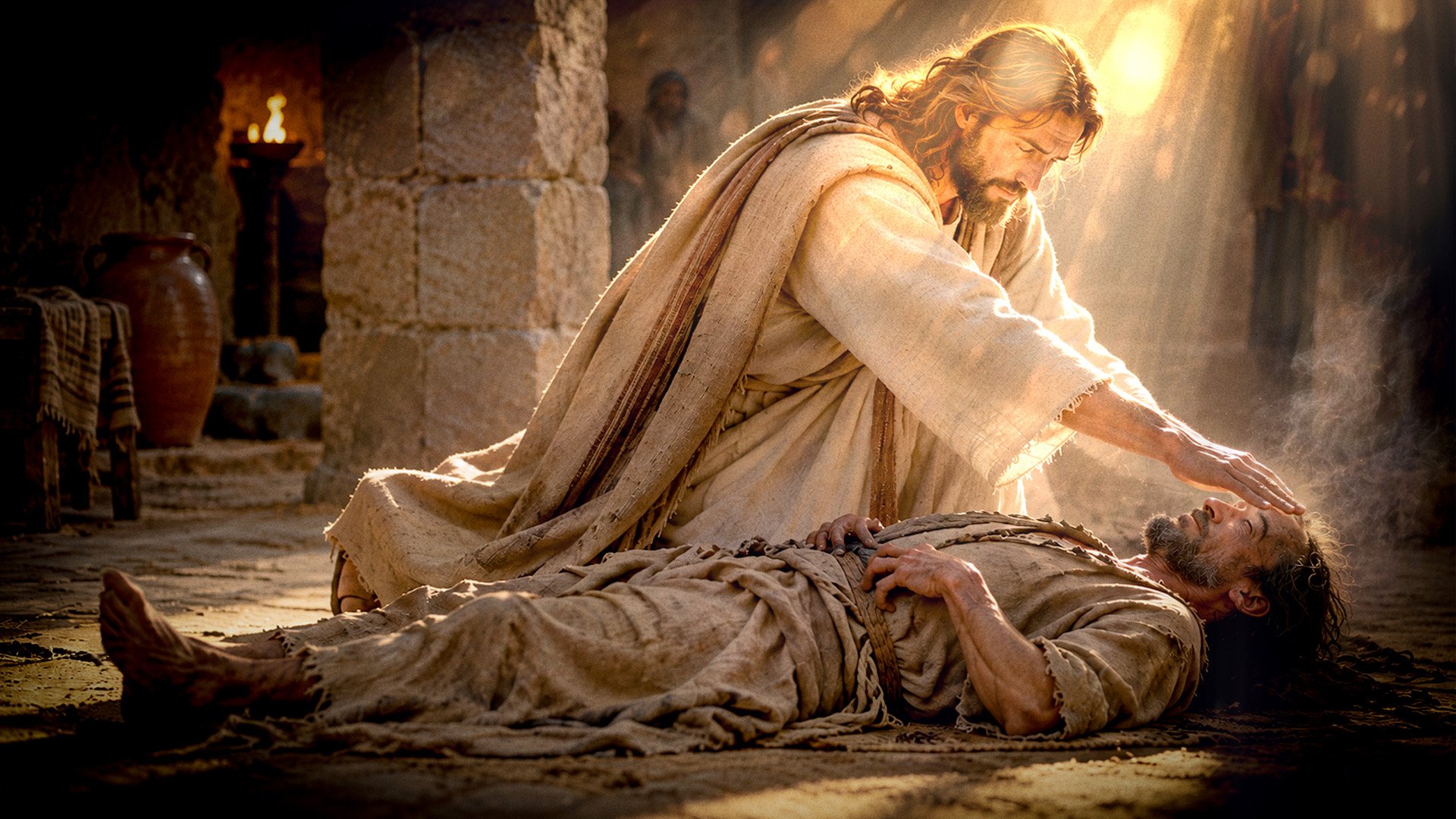
The gospel of Luke also offers an extensive portrayal of Jesus’ healing ministry, with many of the events already depicted in the Gospels of Matthew and Mark.
But given Luke’s background as a physician, his narrative often incorporates terminology that is distinctly medical in flavor. There were many instances of Jesus healing, working miracles, and casting out demons, and just as we saw in the previous chapters that cover Matthew’s and Mark’s accounts, this chapter will highlight entire passages in bold for your reference before we dissect each recorded account verse by verse.
Jesus Delivered A Man with An Unclean Spirit
And in the synagogue there was a man, which had a spirit of an unclean devil, and cried out with a loud voice, saying, Let us alone; what have we to do with thee, thou Jesus of Nazareth? art thou come to destroy us? I know thee who thou art; the Holy One of God. And Jesus rebuked him, saying, Hold thy peace, and come out of him. And when the devil had thrown him in the midst, he came out of him, and hurt him not. And they were all amazed, and spake among them-selves, saying, What a word is this! for with authority and power he commandeth the unclean spirits, and they come out (Luke 4:33-36).
Luke 4:33 says, “And in the synagogue there was a man, which had a spirit of an unclean devil, and cried out with a loud voice.”
The verse says there was a man “which had a spirit of an unclean devil.” The word “had” in Greek is echon, a form of the word echo, which means to have, hold, or possess, but here it is continuous and lets us know this man was continuously in the grip of “a spirit of an unclean devil.” This individual, seemingly a devoted synagogue attendee and perceived as religious, harbored secret turmoil as he was privately tormented by this spirit.
The original Greek text describes this unclean spirit with the words pneuma daimoniou akathartou. The word pneuma means spirit, the word daimoniou means of a demon, and the word akathartou means of uncleanness. Together, they describe a spirit — that is, a demon of uncleanness. The word “unclean” found in verse 33 is rooted in the Greek word akathartos, and it indicates something tainted or defiled, and as we have previously seen, it often suggests sexual impurity on the part of the one afflicted. While the text doesn’t explicitly state it, it hints at the possibility that this man struggled with concealed issues of a sexual nature, hidden beneath a well-maintained religious veneer.
Luke 4:33 also says the spirit “cried out with a loud voice.” The words “cried out” are interpreted from a form of the Greek word anakradzo. The root of this word, kradzo, as we’ve encountered many times, depicts a cry, scream, or shriek. However, the prefix ana suggests a continuous action. Therefore, this man didn’t just scream once; he screamed repeatedly, over and over, his cries piercing the air with relentless intensity.

The descriptor “loud” is derived from the Greek word megale, which here indicates something immense. Thus, with a voice that could only be described as colossal, this man was caught in an unstoppable cycle of hysterical screams. It must have been deeply startling for the others in the synagogue, who likely knew him as a composed and religiously devout individual. But now, to their astonishment and horror, they were witnessing an unnerving transformation that revealed him as one being seized by a demon and behaving in an utterly unpredictable manner.
In Luke 4:34 we find exactly what the demon was hysterically screaming. The verse says, “…Let us alone; what have we to do with thee, thou Jesus of Nazareth? art thou come to destroy us? I know thee who thou art; the Holy One of God.”
The spirit trembled at the thought that Jesus might “destroy” it, revealing a deep awareness of Jesus’ unparalleled authority. The word “destroy” comes from a form of the Greek word apollumi, which means to obliterate and conveys a sense of destruction, dissolution, and utter ruin. Clearly, the spirit dreaded being separated from its human host and therefore clung to it with demonic desperation. As we have seen, demons long for a host through which to operate, and this spirit feared losing the host body in which it operated — knowing the authority of Jesus, it feared that He would not only uproot it from its entrenched place of habitation, but also bring it to complete ruin.
Luke 4:35 goes on to tell us, “And Jesus rebuked him, saying, Hold thy peace, and come out of him. And when the devil had thrown him in the midst, he came out of him, and hurt him not.”
Jesus Was Never ‘Kind’ in His Rebuke of Demonic Entities
Yet again, we encounter the word “rebuked” in verse 35, which is derived from the Greek word epitimao, which is a compound of the words epi and timao. The prefix epi conveys an air of opposition, while the Greek word timao speaks of honor or value. But as the word epitimao, translated here as “rebuked,” it illustrates a harsh verbal attack aimed at undermining one’s honor or value. In essence, Jesus delivered a commanding verbal strike intended to deflate and disempower the spirit, compelling it to retreat hastily.
Jesus commanded the spirit, “saying, hold thy peace” (Luke 4:35). The word “saying” is the Greek word legon, which means to say, but here it is in the continuous form, which implies the spirit may have resisted. Hence, Jesus pressed harder and persistently kept saying “hold thy peace.” The phrase “hold thy peace” is derived from a form of the Greek word phimoo, meaning to muzzle, similar to placing a muzzle on an animal or to enforce silence. In essence, Jesus was unequivocally ordering the spirit to close its mouth and remain silent.
Time and time again in the Gospels, we witness how demon spirits have a flair for the dramatic when confronted, but Jesus consistently denied them the stage to perform in such a manner.
Instead, Jesus, here, summarily ordered the spirit to “come out” of the man. The words “come out” are translated from the Greek words exelthe ap’. The word exelthe is a form of exerchomai, and it means to come or to go, and the word ap’ is a contracted form of apo, which means from or away from and carries the idea of separation. Thus, Jesus commanded this spirit to come out and to separate itself from this man.
Verse 35 goes on to say, “…When the devil had thrown him in the midst, he came out of him, and hurt him not.”
The word “devil” in this verse is translated from the Greek word daimonion, which pictures a singular demon. The words “thrown him” are interpreted froma form of the Greek word rhipto, meaning to fling or hurl. The English word “riptide” is derived from the same Greek word rhipto. A riptide is a treacherous sea current that can sweep an individual away and cause him to drown. But in this context, we see a picture of the demon violently seizing this man and fling-ing him to the ground, casting him into a tempest of chaos and loss of control. Notably, this dramatic episode unfolded right in the “midst” of the synagogue. The word “midst” is from the Greek word meson, which means in the very center, and it indicates this event occurred that day amidst the very heart of those who had gathered in the synagogue.
In response to Jesus’ command, the spirit “came out of him, and hurt him not.” The word “hurt” is translated from a form of the Greek word blapto, which signifies damage, harm, or injury. Despite being tossed and turned by the spirit’s dramatic and chaotic departure, the man emerged unscathed, with the spirit obeying Jesus’ order and leaving the individual completely unharmed, free of damage or injury.
As a result of this ordeal, Luke 4:36 says, “And they were all amazed, and spake among themselves, saying, What a word is this! for with authority and power he commandeth the unclean spirits, and they come out.”
The word “amazed” is translated from thambos, and it indeed describes astonishment and speechlessness. The crowd was not just taken aback by the fact that a religious figure from their synagogue had been demonized, but they were spell-bound by the sheer “authority” and “power” of Jesus. The word “authority” is derived from the Greek word exousia, which pictures a commanding influence — an authority that extends even over the demonic realm — but their awe was compounded by Jesus’ “power.” This word “power” is derived from a form of the Greek word dunamis, which conveys a sense of explosive, superhuman power that comes with enormous energy and produces phenomenal, extraordinary, and unparalleled results.
The word “commandeth” in verse 36 is once again interpreted from a form of the Greek word epitasso, which denotes a decisive and unequivocal order that necessitates immediate obedience. The words “unclean spirits” speak of vile, impure entities that embody everything detested as unholy and profane in God’s sight. Jesus addressed these spirits with the authority of a military leader, and although they belonged to Satan’s hierarchy, they recognized Jesus’ ultimate power. And upon His command, they were compelled to comply and “come out” without resistance.
Step Into the Healing, Freedom, and Authority Jesus Still Releases Today.
Have you ever wondered why sickness, oppression, or cycles of struggle seem to linger in your life? Do you question whether the miracles of Jesus are still available—or if they ended long ago? And if healing is truly yours, why does it sometimes feel just out of reach?
The answers aren’t hidden—they’ve simply been overlooked.
Through years of ministry and deep biblical research, bestselling author Rick Renner uncovers how Jesus healed, delivered, and restored—and why those same supernatural acts are still available to you today. Drawing from the original Greek, historical insights, and the ministry patterns of Jesus in the Gospels, this breakthrough resource reveals not only what Jesus did, but how He did it—and how you can experience it now.
As you read, you’ll discover how to:
Walk in spiritual authority over sickness and demonic oppression
Activate your faith for divine healing and supernatural breakthrough
Minister healing and deliverance using Jesus’ model
Use the name of Jesus to defeat darkness and enforce victory
Discern spiritual roots behind physical and mental struggles
You are not powerless—and you are not alone. The same Jesus who healed the sick, cast out demons, and restored broken lives is still moving today. The enemy’s influence is real, but it is no match for the authority you’ve been given in Christ.